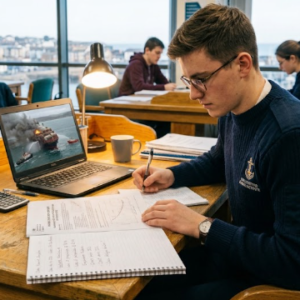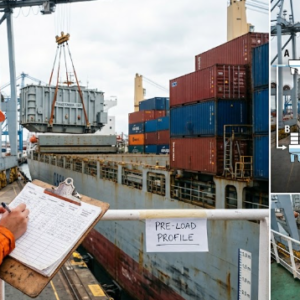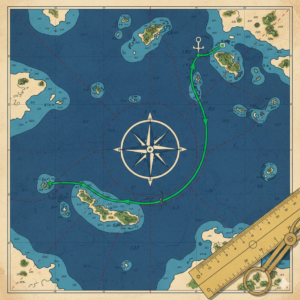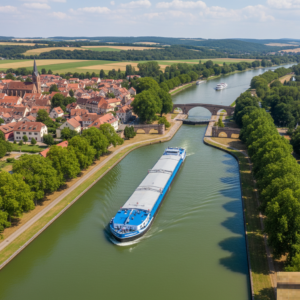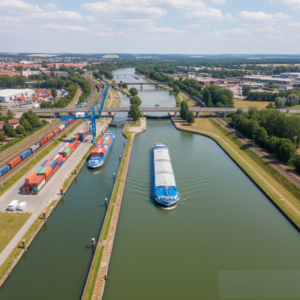
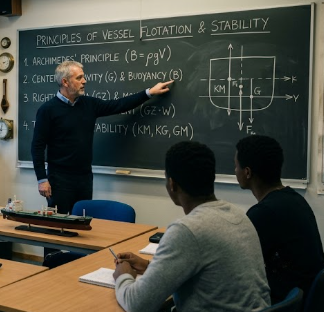
This course covers the core mathematical and physical laws governing a vessel’s flotation, balance, and behavior at sea. Participants will master basic stability concepts—including the center of gravity ($G$), the center of buoyancy ($B$), the metacentric height ($GM$), and the dynamics of transverse and longitudinal stability. The training focuses on calculating the effects of cargo shifts, fuel consumption, and the dangerous free surface effect of liquids in tanks, ensuring officers can accurately interpret stability curves and safely manage the ship’s trim and list under varying sea conditions.
Related products
-
200,00 €
This course introduces the principles and operation of navigational aids and marine radar systems. It covers the use of radar for safe navigation, collision avoidance,…
-
200,00 €
INLAND WATER WAY TRANSPORT COURSE OBJECTIVES: 1. Understand the structure and development of the inland waterway network and market in Europe, including key river corridors like…
-
200,00 €
This course provides the knowledge and proficiency required to perform manual radar plotting in accordance with STCW watchkeeping and collision-avoidance standards. Training includes the use…
-
200,00 €
This course provides comprehensive training in the use and management of internal communication systems on board ships. Students learn the operation of equipment such as…