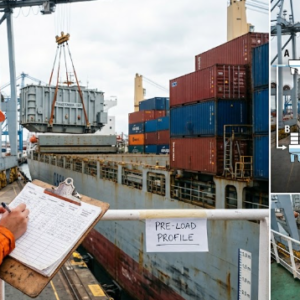
This course covers the core mathematical and physical laws governing a vessel’s flotation, balance, and behavior at sea. Participants will master basic stability concepts—including the center of gravity ($G$), the center of buoyancy ($B$), the metacentric height ($GM$), and the dynamics of transverse and longitudinal stability. The training focuses on calculating the effects of cargo shifts, fuel consumption, and the dangerous free surface effect of liquids in tanks, ensuring officers can accurately interpret stability curves and safely manage the ship’s trim and list under varying sea conditions.
Related products
-
200,00 €
This course provides the knowledge, understanding, and proficiency required to operate and interpret Automatic Radar Plotting Aids (ARPA) in accordance with STCW and COLREGs. Training…
-
200,00 €
This course provides students with fundamental skills in coastal and terrestrial navigation, together with a thorough understanding of the International Regulations for Preventing Collisions at Sea…
-
200,00 €
This course provides the knowledge and proficiency required to calculate midday latitude and determine a vessel’s position using the heights of celestial bodies, in accordance…
-
200,00 €
This course expands the student’s understanding of navigational theory with a focus on geodetics, chart projections, nautical chart interpretation, and the principles that support safe…